
Signing In through the Redirect on This Page
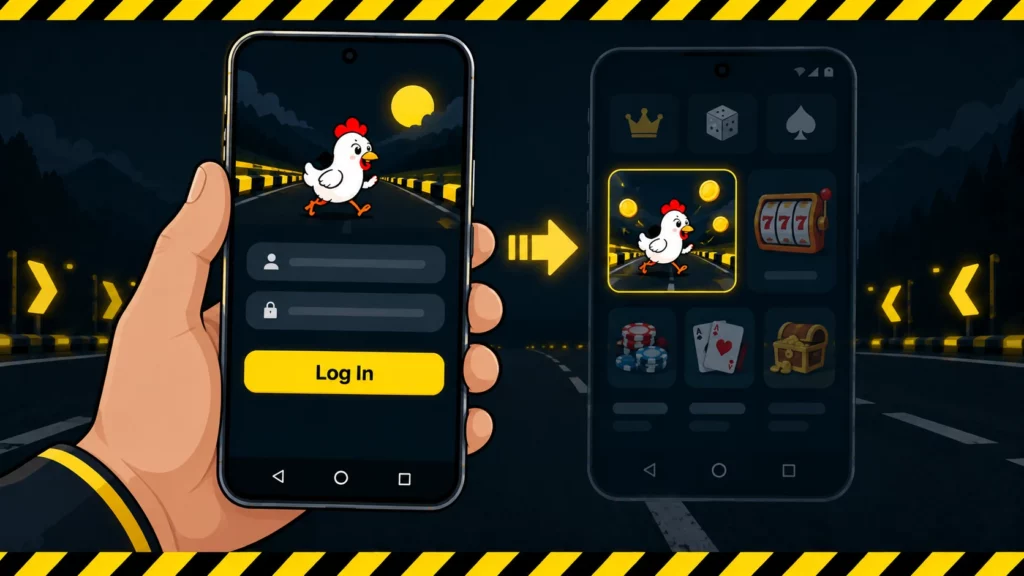
The login process starts on this page, but credentials belong only in the platform form that opens after the redirect. A Chicken Road secure login therefore depends on checking the destination first, not on typing account data into a landing page. The same rule applies when a search query is phrased as Chicken Road casino login or Chicken Road game casino login: the query wording does not create a second authentication system.
- Select Log In or Play Chicken Road on this page.
- Wait for the redirect and check that the opened destination is the expected platform account route.
- Enter the email, phone number or username shown as an accepted login field.
- Enter the account password in that platform form.
- Complete optional 2FA only when it is enabled on the account and requested inside the secure route.
- Open Crash or Search and launch Chicken Road, or continue through the game route already presented after sign-in.
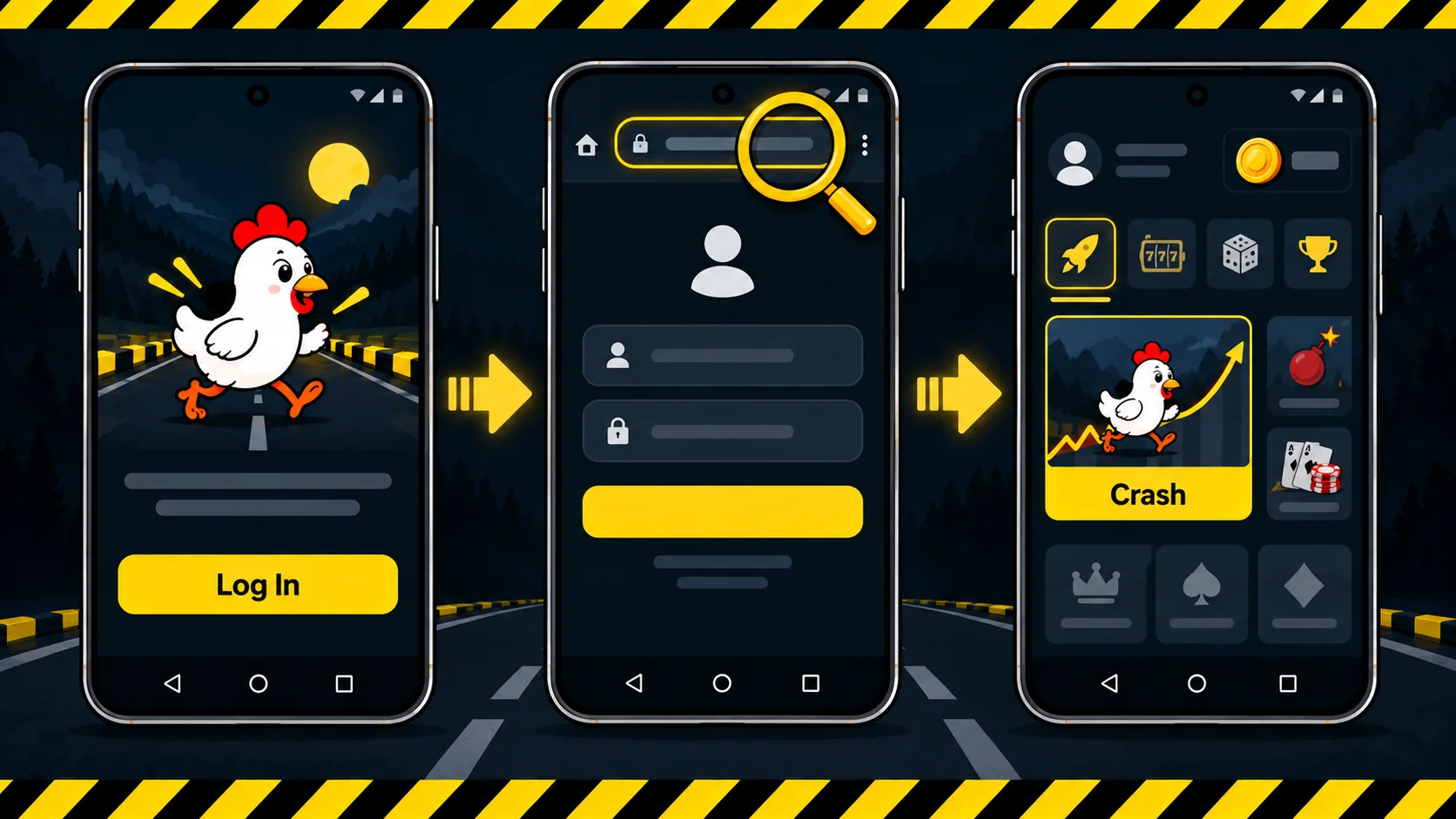
After a successful Chicken Road game login, useful session signs are the familiar profile name, expected balance, personal cabinet, InOut Games in the catalogue and KYC or bonus statuses that match the account. A different balance, unknown profile or unexpected security request is a reason to stop rather than keep submitting credentials.
Wrong credentials should lead to the reset route, not repeated guesses. Lost 2FA access belongs in Security or support after redirect. A temporary restriction should be handled through the account interface, where the user can see the actual status and any requested next step. Searches such as Chicken Road 2 login do not prove that a separate version needs separate credentials.
Using the Same Chicken Road Account on Mobile
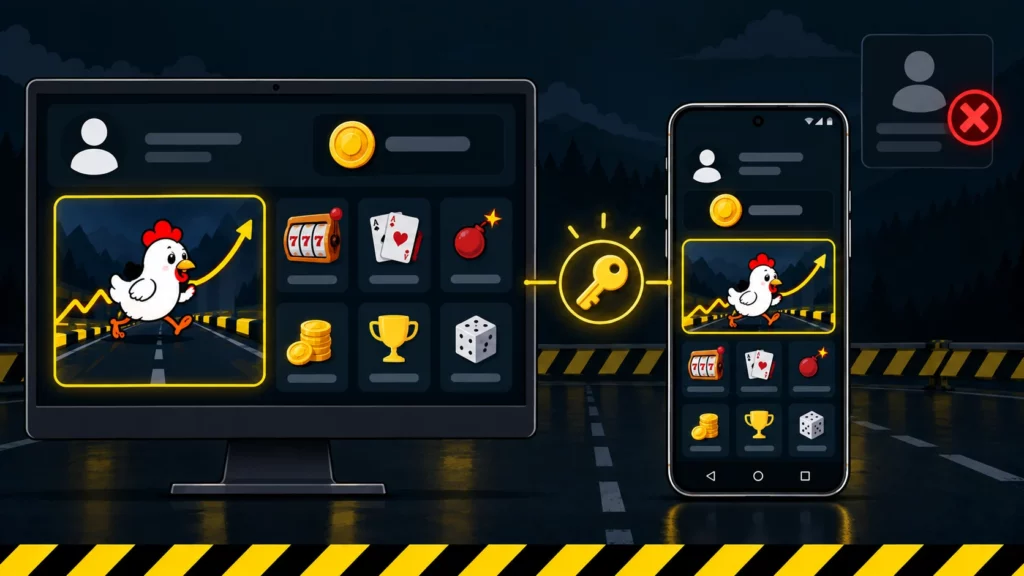
On a phone, the user can press Login, Register or Play on this page and follow the redirect to the mobile web route or to a platform application when that route is genuinely supported. Desktop browser, mobile browser and a supported platform app should point to the same Chicken Road account rather than create separate balances or profiles. The credentials remain the ones attached to that account.
After sign-in, Chicken Road can be found through the Crash category or Search. A Chicken Road login app query should not be treated as proof that InOut Games distributes a dedicated single-game application. The mobile route may simply be the hosting platform client. Instructions for APK or iOS access belong on the separate Chicken Road App page rather than being repeated here.
No biometric authentication, saved session, deep link, push login or automatic installation should be assumed. On a shared device, the user should avoid saving the password and should log out when finished. If the displayed profile name, balance or transaction history differs from what the player expects, private information should not be entered again. The safer next action is to use the support option available through the redirected account interface and verify which profile is open.
Registering a New Platform Account before Opening the Game
A new user should start with Register Now or Play Chicken Road on this page. The redirect opens the hosting platform registration route; the landing page itself is not the place for Chicken Road game registration. Anyone asking how to register for Chicken Road game access should follow the account route rather than search independently for an unofficial registration form.
- Select Register Now on this page.
- Wait for the redirect to the platform registration interface.
- Enter an email address or phone number in the field the form provides.
- Create a username and password only if those fields are displayed.
- Supply accurate personal details requested by the account form.
- Confirm the 18+ requirement, Terms and the contact method when the platform asks for those confirmations.
- Sign in to the new account, then locate Chicken Road through the catalogue or Search.
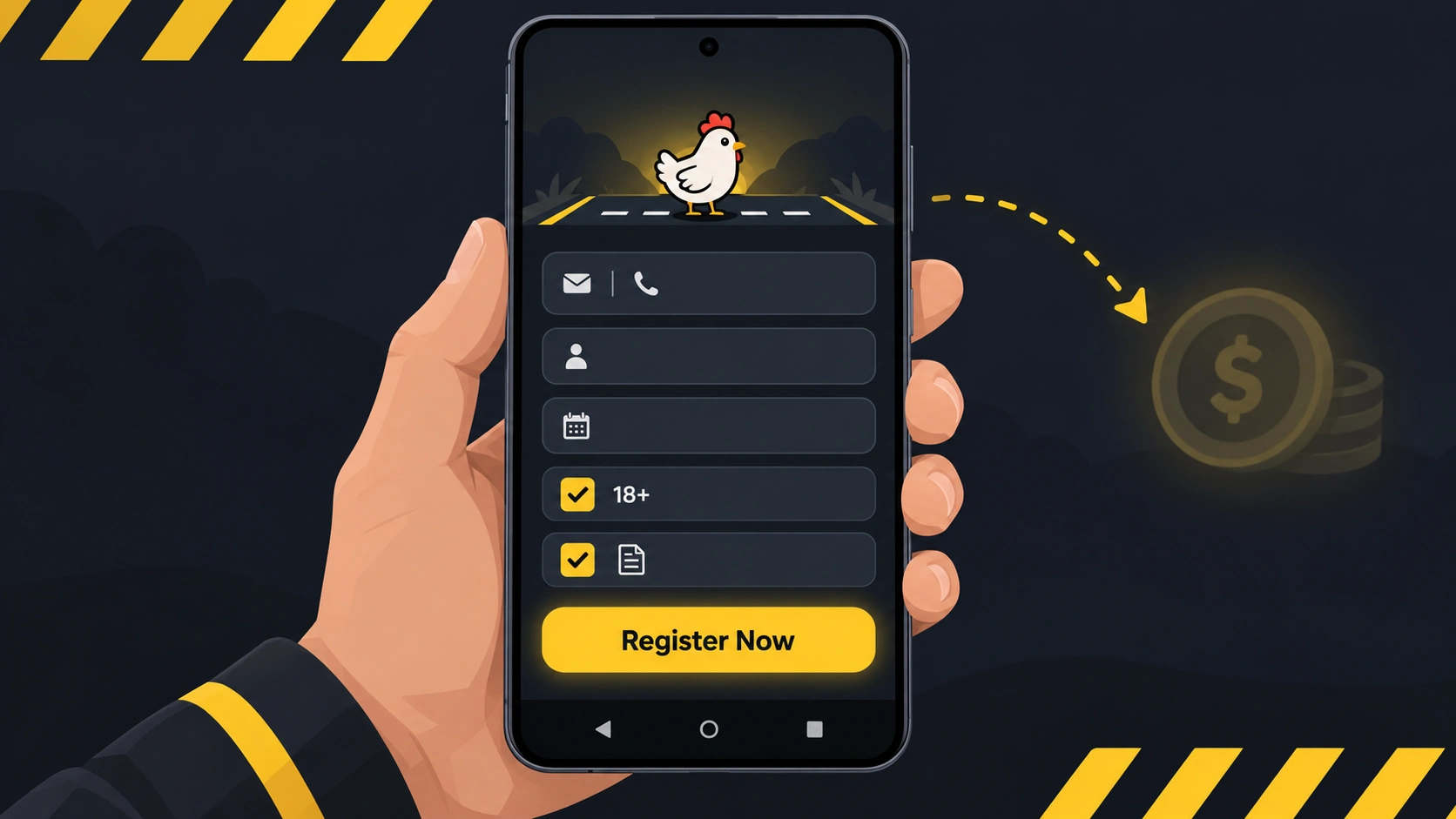
The Chicken Road registration process should not be tied to an invented completion time, password length, document list or mandatory deposit. Registration establishes the hosting account; funding is a separate action. A phrase such as Chicken Road login register may describe the user journey, but it does not mean both actions occur in one unverified form.
Accurate name and birth-date information matters because later identity checks compare account records with information supplied during verification. Payment methods should also belong to the account holder. A mismatch can complicate a withdrawal review, especially if the payment ownership record and profile details do not align. The form displayed after redirect is the controlling source for required fields and Terms. A Chicken Road game register search should never override those live account requirements.
Identity Checks, Payment Ownership and Optional 2FA
| Verification Item | Why It Is Checked | Account Stage |
| Age and Identity Record | Confirms that account details belong to an eligible account holder | Registration or verification when requested |
| Selfie or Liveness on Request | Helps compare the user with the identity record when the account requests it | Account review when requested |
| Residential Address on Request | Supports an address check only when the platform requests one | Verification when requested |
| Ownership of Payment Method | Checks that the payment instrument belongs to the account holder | Before withdrawal or when account and payment data do not match |
| Optional Two-Factor Authentication | Adds a second security step when the account supports and enables it | Security settings and later sign-in when enabled |
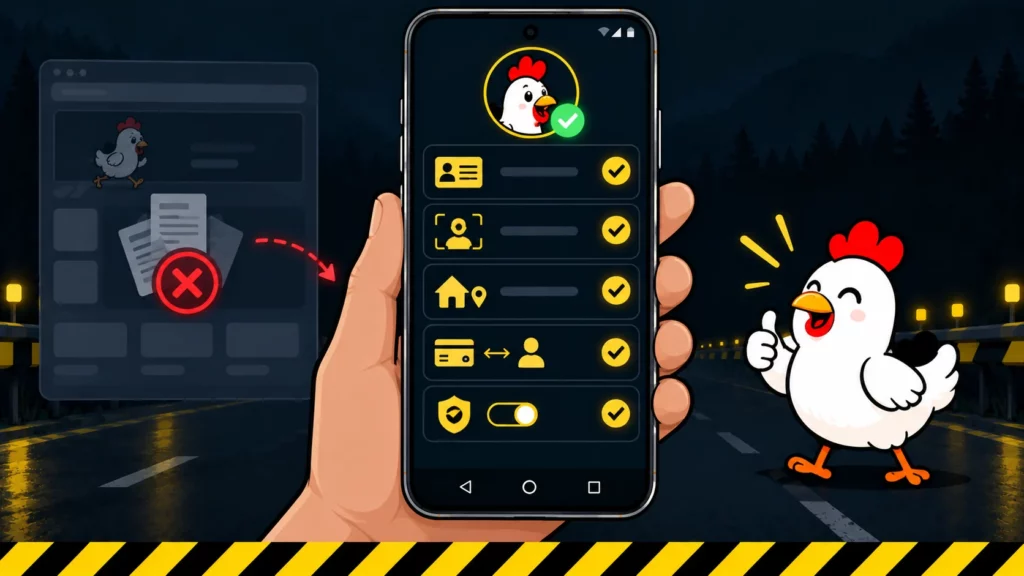
Chicken Road kyc takes place inside the hosting account, not on this landing page. The redirect separates the roles clearly: this page sends the user to the platform, while the account interface handles identity information and any verification request. A landing page should not ask for identity files, a full password, a one-time 2FA code or a recovery key before the user reaches that protected route.
Payment ownership may be reviewed before a withdrawal or when account information and payment details do not match. No fixed review time should be inferred. If the account asks for information, the user should follow the request shown in Profile, Cashier, Security or support rather than send unrelated documents.
3D Secure concerns confirmation of a card transaction. PCI DSS concerns protected handling of payment information. Neither mechanism changes Chicken Road results, guarantees a successful withdrawal or restores gambling losses. Practical account security is simpler: use a distinct strong password, enable optional 2FA when available, use a personal payment method and provide support only with information requested through the secured account route. A full password or recovery key should never be shared.
Recovering a Password and Resolving Access Problems
A Chicken Road password reset should begin from the same landing-page route as a normal sign-in. The recovery process belongs to the hosting account, so there is no separate InOut Games recovery page for the game. The platform controls the contact method and reset interface; no expiry period should be invented.
- Select Log In on this page.
- After the redirect, choose Forgot Password in the platform account form.
- Enter the registered email address or phone number requested by that form.
- Receive the recovery message or code through the contact route the account provides.
- Set a new password and sign in again through the platform account.
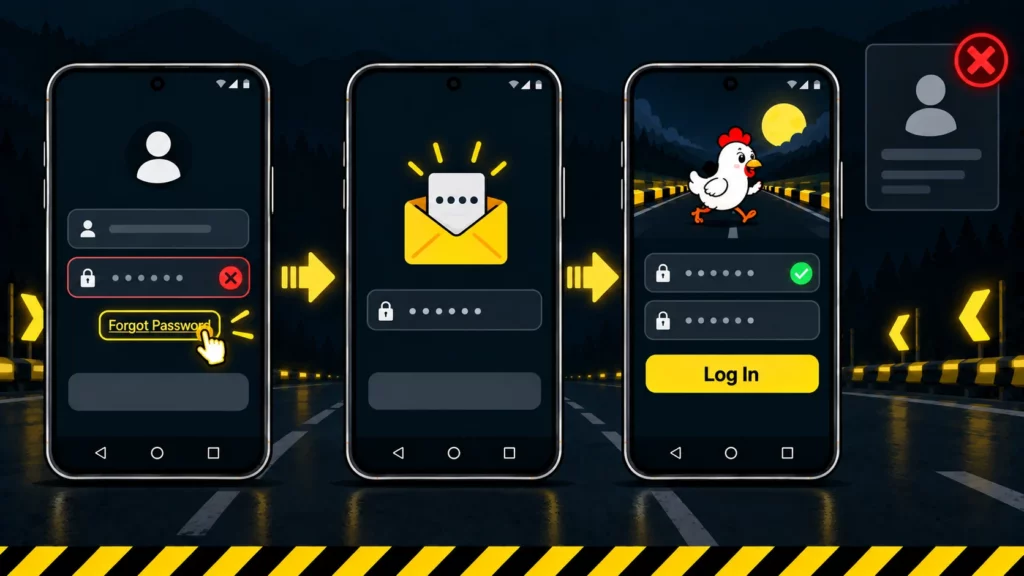
Once access returns, the player can use Crash or Search to play Chicken Road. If the game still does not appear, that is a catalogue or route issue rather than evidence that another profile is required. Opening a duplicate account can create extra identity and payment-ownership conflicts.
Common access problems should be handled with a specific check rather than repeated login attempts:
- Recovery message did not arrive: check spam folders or SMS delivery for the registered contact before requesting further help.
- Old contact is unavailable: compare the contact details available in the account route and open a support request for the supported recovery process.
- 2FA device is lost: use Security settings if access remains available; otherwise ask support about account recovery without sharing a recovery key.
- Account is restricted: create a support request and follow the account-specific review instructions instead of creating another profile.
- Chicken Road is missing after login: check Crash, Search and the InOut Games catalogue before treating the issue as an authentication failure.
If both ordinary recovery channels are unavailable, support may need to route the user through an identity check. The landing page cannot perform that review. A Chicken Road log in problem therefore becomes an account-support matter once the normal reset route cannot establish ownership.
Chicken Road Account Access Questions
No. Chicken Road uses the hosting platform account opened after the redirect. Searches for Chicken Road login game access do not create a separate InOut Games profile.
It should not. Those buttons lead to the platform account interface, where credentials are entered. This page should not retain passwords, one-time codes or recovery keys.
That depends on the loaded platform and the route it makes available. If demo access appears after the redirect, the user can follow it; this page should not promise access the destination does not provide.
When both routes are supported, they should use the same account credentials and balance. Changing device or route does not require a separate profile.
KYC is handled in the hosting platform profile or verification interface. The current page only initiates the redirect and should not collect identity documents before the protected account route opens.
Chicken Road involves the possibility of losing real money. RNG information or a Provably Fair verification route does not create a guaranteed strategy or predictable result. Players should set deposit, loss and session limits, use cool-off or self-exclusion tools when needed, and play only if they are 18 or older. Online gambling rules differ by jurisdiction, so local legality should be checked before using real-money access.